POM vs PA66: Which Engineering Plastic Is Better for Gears, Clips and Wear Parts?
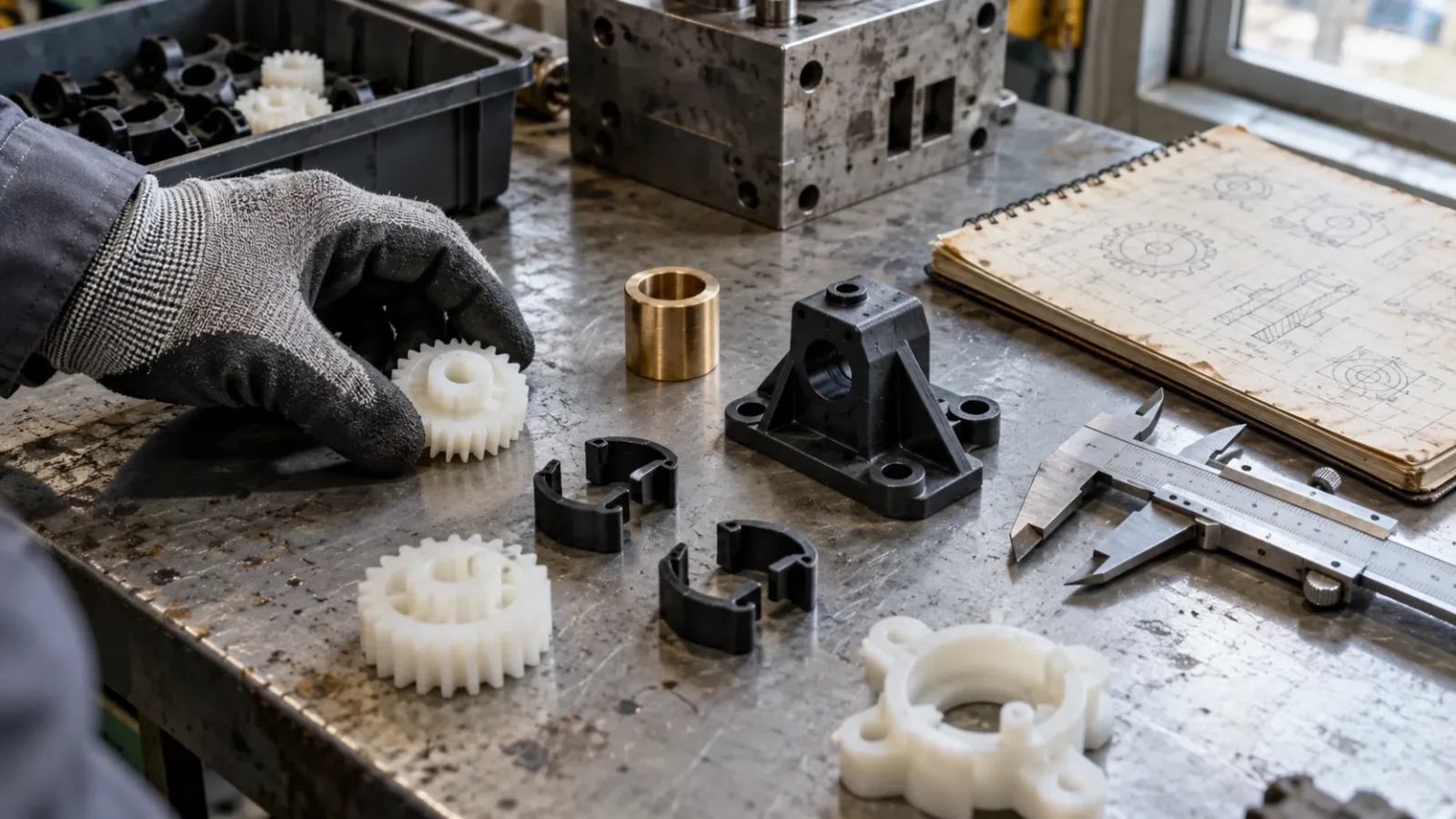
Compare POM and PA66 for gears, clips, bushings and wear parts. Review friction, moisture, dimensional stability, strength and sourcing questions before selecting a grade.
The Quick Answer
POM: Commonly Evaluated for Moving Precision Parts
- Gears and gear housings
- Bushings and bearings
- Latches, clips and fasteners
- Pump and valve components
- Small precision mechanical parts
PA66: Commonly Evaluated for Strength-Focused Components
- Automotive clips and brackets
- Cable-management components
- Electrical and industrial parts
- Reinforced structural components
- Housings requiring a higher-strength material system
POM vs PA66: A Practical Selection Table
Five Questions to Ask Before You Choose
- Will the part slide, rotate or carry a constant load?
- What temperature and humidity will it experience?
- Is dimensional consistency more important than maximum strength?
- Does the part need reinforcement, colour matching or impact modification?
- What is the mating material: metal, plastic, rubber or another moving component?
Do Not Approve a Grade by Name Alone
- Current TDS, COA and SDS
- Exact grade and manufacturer identification
- Reinforcement or additive information
- Processing guidance
- Shrinkage and conditioning data
- A sample for production validation