
Engineering Plastics Guide: PA, PC, ABS, POM & PBT Applications
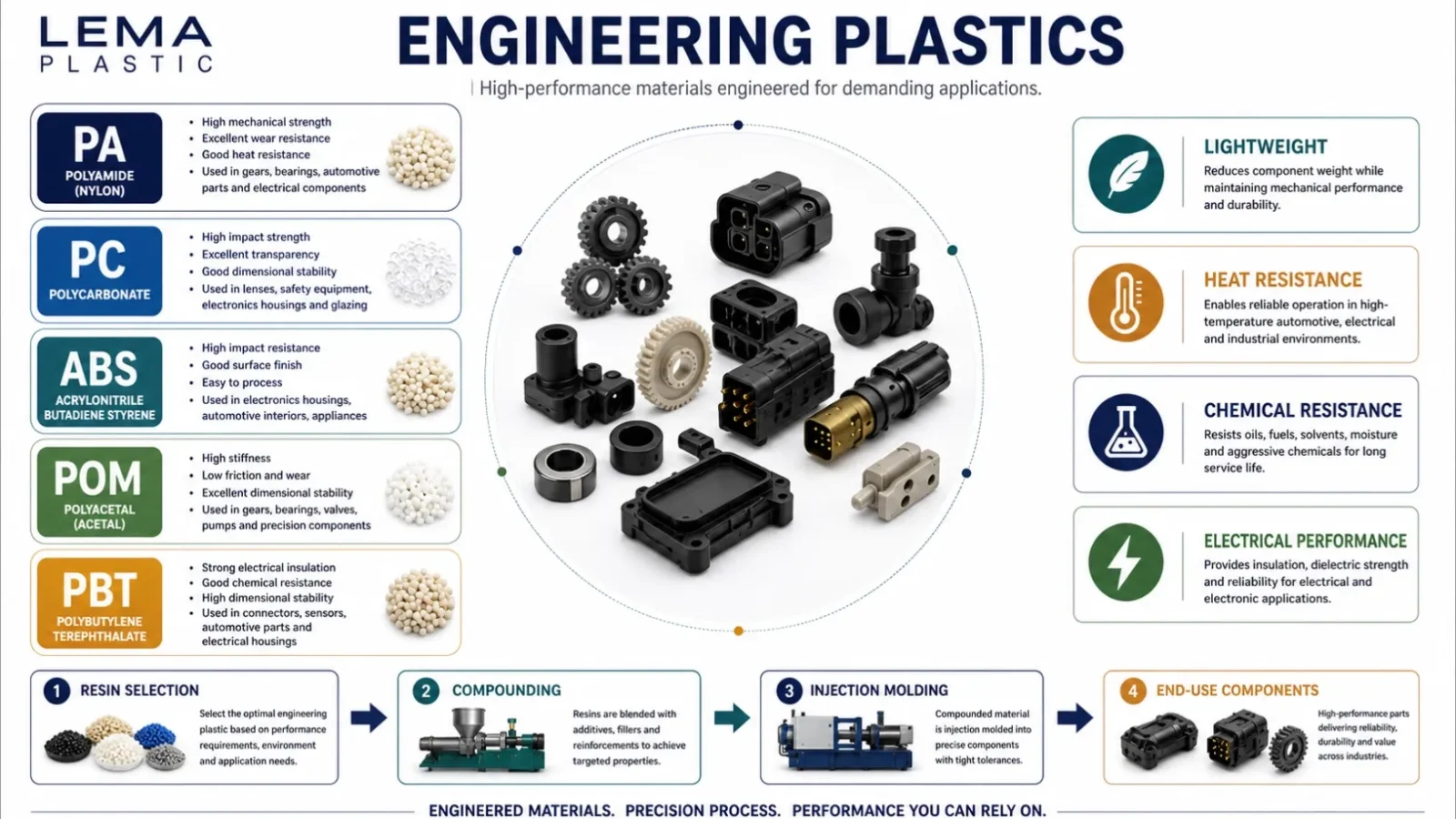
Learn how to select engineering plastics including PA, PC, ABS, POM and PBT for automotive, electrical, industrial and consumer components.
Why Material Selection Matters
Common Engineering Plastics and Their Applications
Polyamide: PA6 and PA66
ABS: Balanced Strength and Surface Quality
PC and PC/ABS: Impact Resistance for Durable Housings
POM: Low Friction for Precision Components
PBT: Electrical Insulation and Dimensional Stability
How to Choose an Engineering Plastic
- Operating temperature and heat-aging requirements
- Impact strength, stiffness and load-bearing needs
- Exposure to oils, fuels, cleaning agents, moisture or UV
- Electrical insulation, CTI or flame-retardant requirements
- Surface appearance, color and texture requirements
- Injection molding process, wall thickness and part geometry
- Dimensional tolerance and long-term stability needs
Typical Engineering Plastic Applications
- Automotive:Interior trim, brackets, air-intake parts, electrical connectors, battery-related components and under-the-hood parts
- Electrical and electronics:Connectors, switch housings, sensors, cable-management parts and control enclosures
- Industrial machinery:Gears, bearings, valves, pump components and wear-resistant mechanical parts
- Appliances and consumer goods:Durable housings, functional components, handles and structural parts
- Construction and equipment:Electrical accessories, fittings, tool components and equipment housings