
POM Homopolymer vs Copolymer: How to Choose the Right Acetal Grade
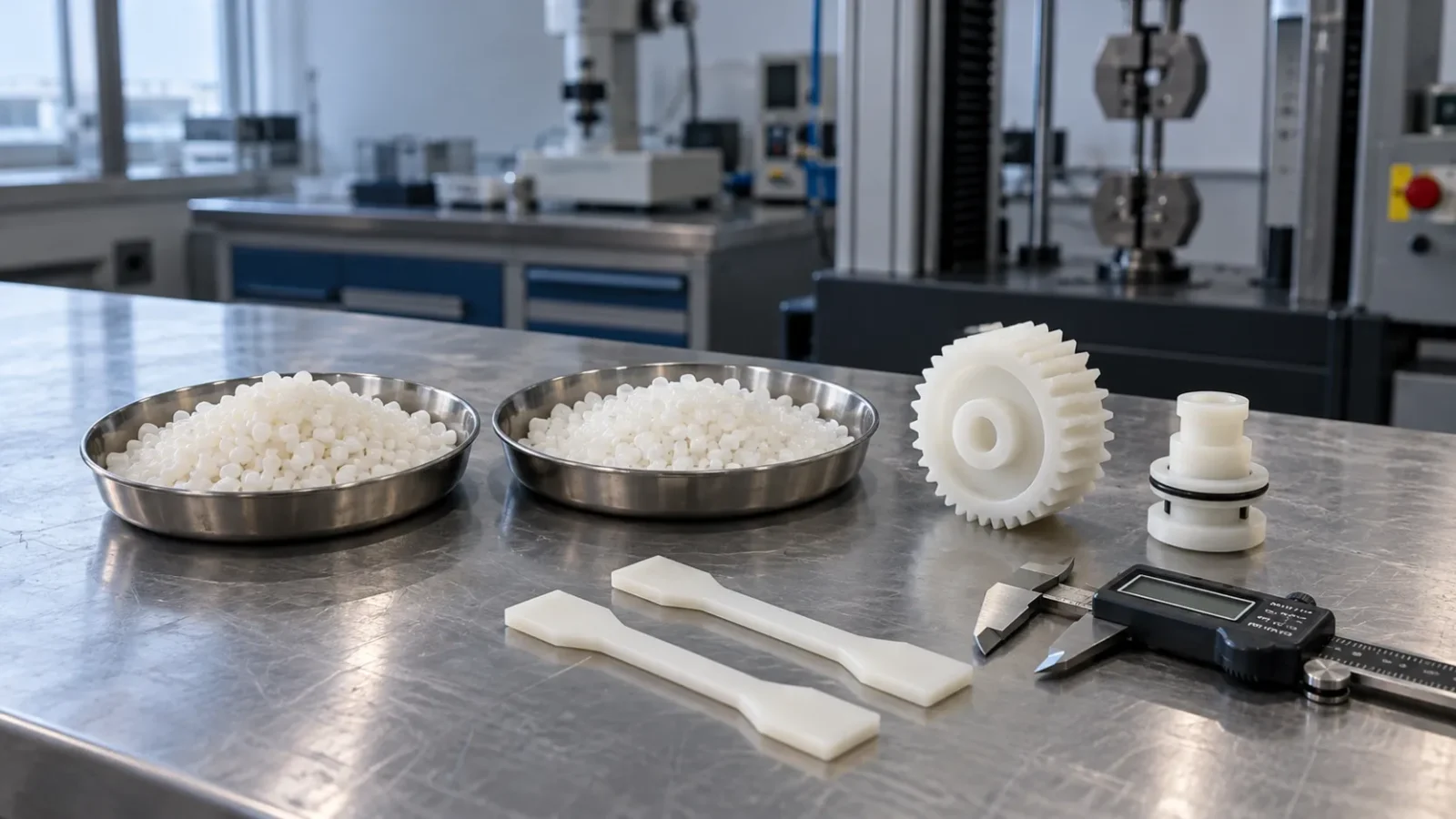
Compare POM homopolymer and copolymer for gears, clips, valves and precision molded parts. Learn how stiffness, chemicals, shrinkage and processing affect grade selection.
POM-H and POM-C: Know the Difference Before Comparing Quotes
- POM Homopolymer (POM-H):Often selected where higher stiffness, strength retention and creep resistance are important.
- POM Copolymer (POM-C):Often considered for applications involving moisture, chemicals, hot water exposure or a broader molding process window.
- Full grade name and manufacturer
- POM-H or POM-C designation
- Technical data sheet
- Melt flow or viscosity data
- Shrinkage data
- Recommended molding conditions
- Lot-specific COA where required
Quick Decision Guide: Which POM Should You Evaluate First?
1. Stiffness and Creep: Important for Parts Under Continuous Load
- Tensile strength and tensile modulus
- Flexural strength and flexural modulus
- Creep data at the actual service temperature
- Fatigue performance, where the part cycles repeatedly
- Heat deflection temperature under the stated test load
- Part geometry and stress concentration points
2. Moisture, Chemicals and Hot-Water Exposure
- Valve and fluid-handling components
- Pump parts
- Appliance components exposed to moisture
- Industrial parts cleaned with chemical solutions
- Plumbing-related assemblies
- Components used in humid production environments
- Chemical type
- Concentration
- Temperature
- Internal stress in the molded part
- Exposure duration
- Whether the part is under load
3. Shrinkage Can Change Tool Fit and Assembly Performance
- Precision gears
- Press-fit components
- Bearing seats
- Mating housings
- Valve assemblies
- Multi-component products with tight tolerances
- Mold a controlled trial using the proposed grade.
- Measure the tightest dimensions after the agreed conditioning period.
- Assemble the part with its mating component.
- Test functional movement, load, noise and fit.
- Compare results with the current approved material.
4. Processing Conditions Matter as Much as Resin Type
- Drying recommendations
- Barrel temperature profile
- Mold temperature
- Injection speed and holding pressure
- Residence time
- Regrind policy
- Venting and gate design
- Cycle time and part appearance
5. Can POM Copolymer Replace POM Homopolymer?
- Safety-related functions
- Customer-approved specifications
- Leakage prevention
- Structural load
- Tight-tolerance assemblies
- Long-term fatigue
- Tooling that cannot easily be modified
6. A Practical Three-Step Qualification Plan
Step 1: Confirm the Material Documentation
Step 2: Run a Controlled Mold Trial
Step 3: Test the Real Part Function
Frequently Asked Questions
Is POM the same as acetal?
Is POM-H always stronger than POM-C?
Is POM-C better for chemical exposure?
Can I switch POM suppliers without changing the mold?
Choose by Part Function, Not by Material Name Alone
- Choose a homopolymer candidate when stiffness, creep resistance and continuous-load performance are central.
- Evaluate a copolymer candidate when moisture, chemical exposure or process robustness is a major concern.
- Validate either option with the actual mold, actual part dimensions and real service conditions.