
PC Resin for LED Diffusers: How to Specify Haze, Transmittance and UV Stability
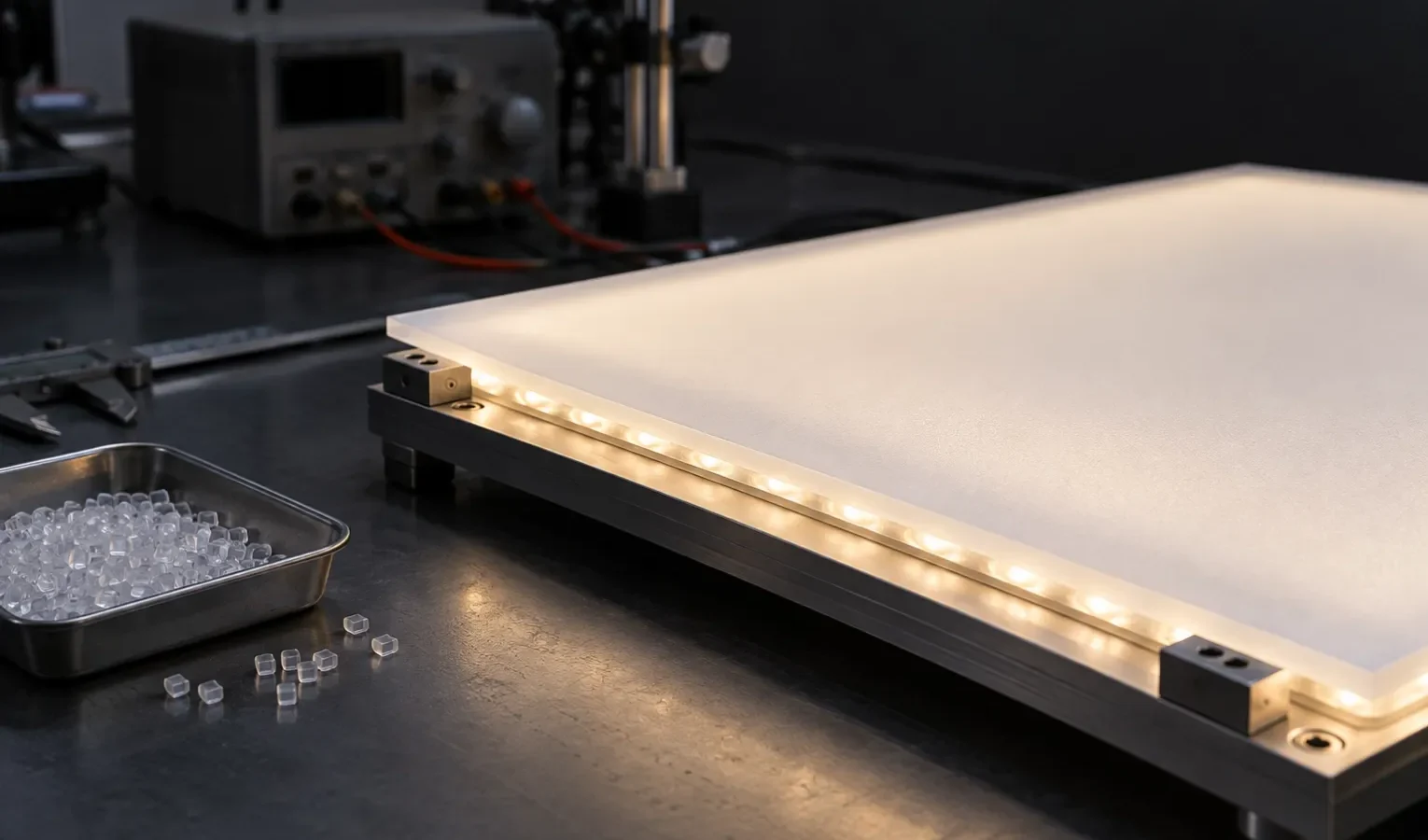
Buying PC resin for LED diffusers? Use this practical checklist to specify light transmission, haze, UV stability, melt flow, documents and trial requirements before ordering.
Begin with the lighting application
- LED diffuser sheet, extrusion profile, lens, lamp cover or injection-molded housing;
- indoor, covered outdoor or fully exposed outdoor use;
- linear LEDs, point LEDs or a surface light source;
- extrusion, injection molding, thermoforming or a secondary fabrication process;
- target part thickness and surface finish.
Transmittance and haze should be specified together
Do not overlook UV and heat exposure
Melt flow is a processing decision, not a catalogue detail
The document and trial checklist
- The current technical data sheet for the exact grade and color.
- A representative certificate of analysis (COA), and confirmation that the shipped lot will have its own COA and lot identification.
- SDS and any customer, lighting-market or destination-market documentation required for the project.
- Processing guidance, especially drying and temperature recommendations for the selected process.
- Packaging, moisture protection, pallet configuration, MOQ, lead-time basis and Incoterm.
- A retained resin sample and a finished-part approval plan.
Five common buying mistakes
1. Ordering “transparent PC” for a diffuser
2. Comparing optical figures at different thicknesses
3. Ignoring drying and handling
4. Treating UV resistance as an all-purpose outdoor guarantee
5. Approving the grade before testing it under the real light source
A better enquiry for diffuser-grade PC
Buy the optical result, not only the resin name
FAQ
Which PC resin is best for LED diffuser sheets?
Does a higher light-transmission value always make a better diffuser?
What information should I send when requesting PC resin for lighting?
Source
- Wanhua CLARNATE® OL1058 PC Polycarbonate Resin | UV Resistant Virgin Pellets